
Reforge Industries
All materials

Extreme environment, carbon-stiff

PPS-CF15 3D Printing

Carbon-fiber PPS, chemically immune, high-temp, light, and stiff.

Upload your part

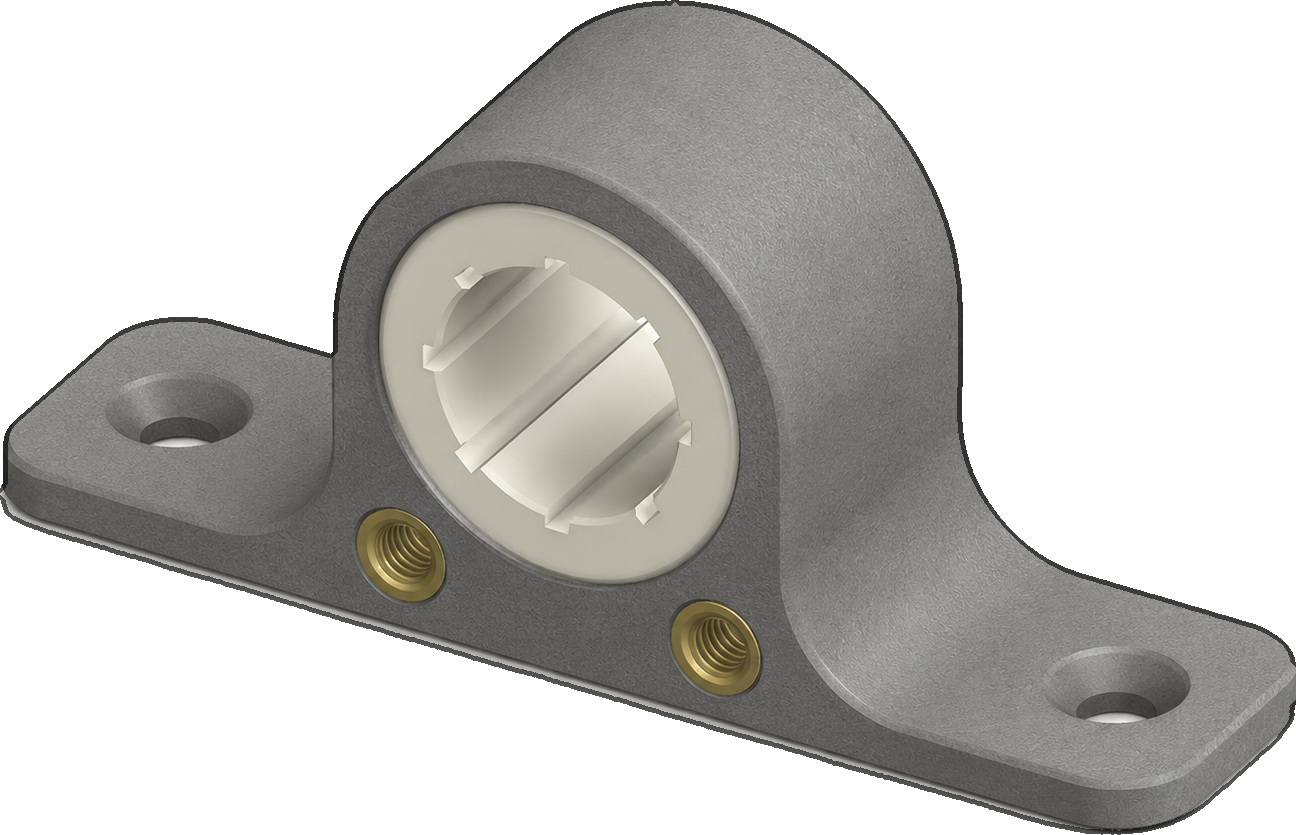
A palm-sized bracket in PPS-CF15 runs about $22.67 plus shipping.

Your files stay private. You keep 100% of your IP.
Heat resistance10/10
Chemical resistance10/10
Stiffness9/10
Tensile strength87 MPa1
Flexural modulus7.16 GPa2
Heat deflection (HDT)264 °C3
Impact (unnotched)11.6 kJ/m²4

1 ISO 527, X-Y orientation, 23 °C.

2 ISO 178, X-Y orientation, 23 °C.

3 ISO 75, 0.45 MPa.

4 ISO 179-1/1eU, unnotched, X-Y orientation, 23 °C.

A carbon fiber reinforced high performance polymer that is exceptionally inert and heat stable. It stays rigid past 250°C, absorbs almost no water, and is inherently flame retardant. It resists acids, bases, fuels, and solvents even when hot.

PPS-CF15 printed-part datasheet

Mechanical

Tensile strength (X-Y)87 ± 5 MPaISO 527
Tensile strength (Z)24 ± 3 MPaISO 527
Young’s modulus (X-Y)8,230 ± 270 MPaISO 527
Young’s modulus (Z)2,850 ± 160 MPaISO 527
Bending strength (X-Y)142 ± 5 MPaISO 178
Bending strength (Z)36 ± 4 MPaISO 178
Bending modulus (X-Y)7,160 ± 280 MPaISO 178
Bending modulus (Z)2,460 ± 190 MPaISO 178
Elongation at break (X-Y)1.2 ± 0.4%ISO 527
Elongation at break (Z)0.7 ± 0.3%ISO 527
Charpy impact, unnotched (X-Y)11.6 kJ/m²ISO 179
Charpy impact, notched (X-Y)6.2 ± 1.6 kJ/m²ISO 179

Thermal

HDT @ 0.45 MPa264 °CISO 75

Physical

Saturated water absorption0.05%
FlammabilityUL94 V-0 (resin rating; printed parts are not UL-certified)

Environment

Chemical resistanceNo known solvent below 200 °C; excellent against acids, bases, and salts — second only to PTFE.
Electrical behaviorResistivity not published by the manufacturer — do not spec for conductive or ESD duty.

Manufacturer printed-specimen values. Not certified design allowables.

PPS-CF15 is polyphenylene sulfide filled with 15% chopped carbon fiber, and it is the material we hand to engineers who need one part to stand up to heat, chemicals, and moisture at the same time. It prints stiff (8,230 MPa tensile modulus), serves continuously past 200 °C, and absorbs so little water that wet and dry parts measure the same. The trade is brittleness: 1.2% elongation means no snap fits and no impact duty. If your part lives on a manifold, a coolant loop, or anywhere solvents pool, this page is the datasheet conversation we would have at the counter.

Great for

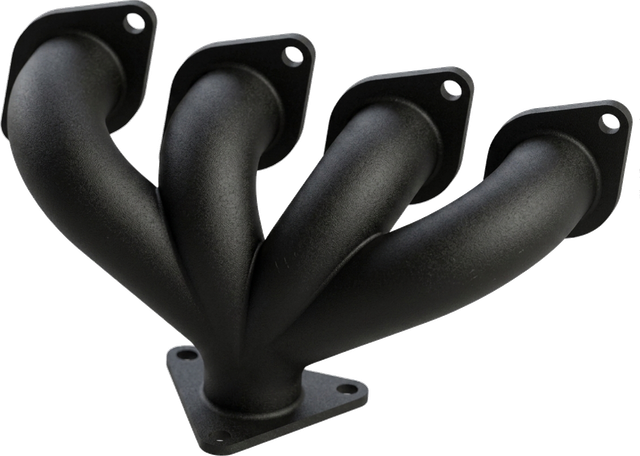
  • Manifolds, fittings, and pump internals in fuel, coolant, or chemical service
  • Under-hood and near-exhaust brackets that see 150 to 210 °C all day
  • Fixtures that live through washdown, sterilization, or solvent baths
  • Dimensionally critical parts in wet, humid, or submerged environments

Worth knowing

  • Brittle by design: 1.2% elongation, so no snap fits, press fits, or flexing features
  • Z-direction tensile is 24 MPa against 87 in plane; orientation matters more than usual
  • Impacts and sub-zero shock duty belong in a tougher polymer
  • Carbon-filled but not ESD rated; resistivity is not published for this grade

The polymer

What PPS-CF15 actually is

Polyphenylene sulfide (PPS) is a chain of benzene rings joined by single sulfur atoms, and that structure is the whole story of its behavior. There is no ester, amide, or other reactive link for water or chemistry to attack, so the backbone has nothing to hydrolyze. The rings pack into crystals that hold the chain rigid at high temperature, and the sulfur links char in flame instead of feeding it, which is why the resin family rates UL94 V-0 with no additives. Attack requires an aggressive oxidizer, concentrated nitric or chromic acid, going after the sulfur itself. Below about 200 °C the polymer has no known solvent.

The 15% chopped carbon fiber turns a difficult engineering resin into a stiff, stable printing material. Fiber carries the printed tensile modulus to 8,230 MPa, holds ±0.15 mm through heat and humidity cycles, drops elongation to 1.2%, and sets the crisp matte black finish. It also wears out brass nozzles, so we run hardened steel. Every PPS-CF15 part we ship is annealed after printing: annealing finishes the crystallization the print started, and that crystallinity is what carries the heat deflection temperature to 264 °C. The fused filament PPS literature documents the same annealing and crystallinity gain (Journal of Applied Polymer Science, 2020).

The numbers

Where PPS-CF15 sits in the lineup

Every figure below is manufacturer TDS data measured on printed specimens, X-Y orientation unless labeled otherwise, with the test standard on each row. Nothing is borrowed from injection molded coupons and nothing is estimated. When we publish our own measurements, a row flips to the Measured tag; until then, TDS means the filament maker tested printed coupons to the cited standard. The ranked charts place PPS-CF15 against every material we run, because a number only means something next to its alternatives.

Tensile strength, PPS-CF15 vs every material we run
PPA-CF20168PA6-CF20102PPA-GF1589PPS-CF1587 MPaPA12-CF1072PC-CF1570ABS-CF1568PET-CF1766PPS-GF2064PET-GF1560Polycarbonate55ASA52PETG51ASA-GF1046Nylon 1245PEBA 90A36PETG-ESD36PETG-CF1535ABS33TPU 90A12.5TPU 85A12

ISO 527, X-Y orientation, 23 °C. Values as published per material; a material without a published figure is not shown.

Heat deflection, PPS-CF15 vs every material we run
PPS-CF15264 °CPPS-GF20236PPA-CF20227PA6-CF20186PET-CF17148PPA-GF15147Nylon 12135PC-CF15135PET-GF15134PA12-CF10131Polycarbonate112ASA100ABS-CF1598ASA-GF1097ABS87PETG-ESD76PETG-CF1574PETG71

ISO 75, 0.45 MPa. Values as published per material; a material without a published figure is not shown.

Property balance
Stiffness 9Heat 10Chemical 10Wear 5Impact 5

Reforge catalog ratings, 0 to 10, calibrated across every material we run. A shape comparison, not test values.

Temperature capability
-50°C0°C50°C100°C150°C200°C250°C300°C23°C-20°CContinuous service210°CExcursionsHDT 264°C

Continuous window and excursion limit are the Reforge service recommendation for printed parts, set tighter than the datasheet. HDT per manufacturer TDS, ISO 75 at 0.45 MPa. Below -20°C the material embrittles.

Printed anisotropy, X-Y vs Z
Tensile strengthX-Y87 MPaZ24 MPa · keeps 28%Flexural strengthX-Y142 MPaZ36 MPa · keeps 25%Flexural modulusX-Y7,160 MPaZ2,460 MPa · keeps 34%

Manufacturer TDS, printed specimens, ISO 527 / ISO 178, 23 °C. Printed specimens. Load a printed part in its X-Y plane; the Z direction is the layer-adhesion direction.

PropertyValueMethodSource
Tensile strength87 MPaISO 527, X-Y orientation, 23 °CTDS
Flexural modulus7.16 GPaISO 178, X-Y orientation, 23 °CTDS
Heat deflection (HDT)264 °CISO 75, 0.45 MPaTDS
Impact (unnotched)11.6 kJ/m²ISO 179-1eU, unnotched, X-Y orientation, 23 °CTDS
Charpy impact, notched6.2 ± 1.6 kJ/m²ISO 179-1eA, X-Y, 23 °CTDS

TDS rows are manufacturer data measured on printed specimens, X-Y orientation unless noted. Measured rows are Reforge-tested on printed specimens to the cited standard. Typical values, not design minimums. Notched and unnotched impact are different tests and are not comparable. Full table on the PPS-CF15 datasheet.

In service

How it behaves over years, not minutes

Moisture

Saturated water absorption is 0.05%, effectively zero. A PPS-CF15 part measures the same and carries the same stiffness bone dry, at 70% humidity, or submerged, so there is no conditioning schedule and no wet-strength derate. This is the property that makes nylons a maintenance conversation in wet service and PPS a non-event. Salt water and brine change nothing either.

Temperature

We stand behind -20 to 210 °C continuous, with short unloaded excursions to 250 °C. Heat deflection is 264 °C at 0.45 MPa on annealed printed specimens. Those are different numbers on purpose: HDT marks a deflection onset, not a duty rating. Year-scale hot aging still counts; glass-filled PPS composites lose measurable strength after long exposure at 145 °C (Polymers, 2022), so leave margin in permanently hot designs.

Creep

Creep resistance is a PPS signature, and the carbon fill improves on it. Bolted joints keep preload, and fixtures under constant clamp hold their dimensions for years, which separates this material from polymers that pull a good one-minute tensile number and then relax in service. Sustained loads can run near datasheet values instead of the heavy derates unfilled thermoplastics need.

UV and weather

The carbon fill shades the polymer from sunlight, on top of a backbone that is already stable outdoors. The matte black surface keeps its look through years outside, with none of the chalking styrenic housings develop. For decade-class cosmetic surfaces we still suggest a coating, but structurally, outdoor duty is comfortable.

Chemicals

Below roughly 200 °C there is no known solvent. Fuels, oils, glycols, hot alkalis including sodium hydroxide, chlorinated and pool water, sanitizers, and washdown chemistry all leave it alone; that record is why the polymer family is the fuel system benchmark. The one documented gap is strong oxidizing acids, concentrated nitric or chromic, which attack the sulfur link itself. If your stream oxidizes, tell us. Otherwise the default answer is immunity.

Cold and impact

Toughness is the honest weakness. Unnotched Charpy impact is 11.6 kJ/m² in plane, elongation is 1.2%, and below -20 °C the matrix goes glassy. Drops, prying, and shock loads crack it where a nylon would dent. Keep it away from hand-tool abuse, and cushion metal contact on parts that work below freezing.

Applications

What teams actually print with it

Coolant loop fittings and impeller shrouds

Hot glycol attacks nothing in the backbone, the part holds clamp load without creeping, and zero water uptake keeps bores round. This is the duty PPS was commercialized for.

Chemical dosing manifold bodies

One printed body replaces a machined block when the stream is a solvent or hot caustic. Immunity below 200 °C means the chemical list stops being a design constraint.

Under-hood brackets near exhaust heat

Continuous 180 to 210 °C with vibration favors stiffness and creep resistance over toughness. Bolted joints keep their torque where lesser polymers relax.

High-temp drone and robot frames

Stiffness per gram near the top of our lineup, matte black straight off the printer, and no humidity-driven dimension drift between shop and field.

Sterilizable stiff fixtures

Autoclave cycles, sanitizers, and washdown chemistry do not move it. Locating features stay where the CMM expects them through repeated thermal cycles.

Design notes

Designing a PPS-CF15 part that works

Orient the part so service loads run in the print plane. In plane you get 87 MPa; across the layers you get 24, and a Z-loaded PPS-CF15 part is a design mistake, not a material limit. Keep walls at 1.2 mm or more, radius every internal corner generously, and rib large flats against warp rather than for strength, because the section is stiff enough already.

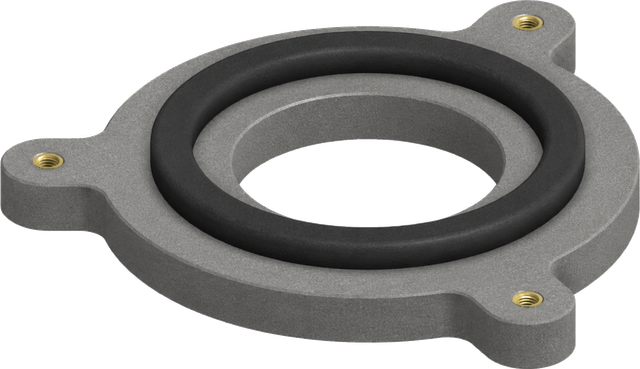
Joints: skip press fits and snap fits entirely, 1.2% elongation does not forgive interference. Bolt or bond instead. Heat-set inserts seat well when driven hot and straight, and the stiff wall does not forgive a crooked start, so flag threaded bosses and we install the inserts here as part of the order. Expect ±0.15 mm on printed features through heat and humidity cycles, with critical holes reamed to size.

Skip it when

  • Impact, drop, or prying duty: 1.2% elongation cracks before it bends
  • Sub-zero shock loads: the matrix is glassy below -20 °C
  • ESD-rated or conductive duty: resistivity is not published for this grade
  • Skin contact or food service: the filament grade carries no certification
  • Living hinges, snap fits, or anything designed to flex

Adjacent materials

When a neighbor is the better pick

FAQ

Questions engineers ask

Is PPS-CF15 a PEEK alternative?

For chemical immunity, creep resistance, and dimensional stability, yes, at a fraction of the material cost. PEEK keeps the edge in continuous temperature, toughness, and certified aerospace heritage. If the part needs solvent immunity and stiffness rather than 250 °C of continuous duty, PPS-CF15 usually answers the question PEEK was asked.

What chemicals attack PPS-CF15?

Strong oxidizing acids: concentrated nitric, chromic, and similar oxidizers go after the sulfur link in the backbone. Below roughly 200 °C nothing else has documented solvent action, including fuels, glycols, chlorinated water, and hot sodium hydroxide. Send the stream list if it oxidizes; everything else is a yes by default.

Is PPS-CF15 conductive or ESD safe?

Spec it for neither. Carbon fiber makes the composite less insulating than neat PPS, but the manufacturer publishes no resistivity for this grade, and unverified conductivity is how ESD programs fail audits. For dissipative duty we run PETG-ESD, which publishes a real surface resistance window.

Does PPS-CF15 need to be annealed?

Yes, and we do it on every order. Annealing finishes the crystallization, which is what carries heat deflection to 264 °C and locks in dimensional stability; the fused filament PPS literature documents the same crystallinity gain. Parts arrive already annealed and ready for service, with no post-processing on your side.

How much heat can a PPS-CF15 part take?

Its heat-deflection temperature is about 264°C. For continuous load, design below that and share the service temperature in your notes so we can flag it.

Ordering and logistics

What tolerances can Reforge hold on a printed part?

Our FDM process holds roughly ±0.2 mm on typical features, with tighter control on dimensions you call out as critical. Flag what matters in the notes and we orient, print, and finish the part to protect those features, including reaming holes to size.

What files do you need, and how do I get a price?

Upload a STEP or STP solid for the cleanest result; we also accept STL, OBJ, and 3MF. Drop one part or a whole assembly and you get a real price in seconds, no account needed to start.

What is the smallest wall or feature you can print?

Design to about a 1 mm minimum wall; thinner is possible on request but gets fragile. Small precision holes are printed slightly undersize and reamed to spec when you flag them.

Do you keep my design confidential?

Yes. Your files stay private to your account, you keep 100% of your IP, and nothing is shared or reused. Upload without an NDA, or ask for one if your process requires it.

How fast can I get parts?

Standard lead time is a few business days once your order is confirmed, with expedited options at checkout. You see an arrives-by date before you pay.

Sources

Sources and standards

  • El Magri, A., El Mabrouk, K., Vaudreuil, S., Ebn Touhami, M. Experimental investigation and optimization of printing parameters of 3D printed polyphenylene sulfide through response surface methodology. Journal of Applied Polymer Science, 2020. doi.org/10.1002/app.49625
  • Deng, J., Song, Y., Xu, Z. Thermal aging effects on the mechanical behavior of glass-fiber-reinforced polyphenylene sulfide composites. Polymers, 2022. doi.org/10.3390/polym14071275
  • High-performance carbon fiber reinforced polyphenylene sulfide via fused granular fabrication. Polymer Composites, 2026. Reports in-plane tensile near 110 MPa against 33 MPa across layers at 25 wt% carbon, the same anisotropy pattern shown in the chart above. doi.org/10.1002/pc.70952
  • Ahn, S. H., Montero, M., Odell, D., Roundy, S., Wright, P. K. Anisotropic material properties of fused deposition modeling ABS. Rapid Prototyping Journal, 2002. The foundational study of printed-part anisotropy. doi.org/10.1108/13552540210441166

Test standards referenced on this page: ISO 527 (tensile), ISO 178 (flexural), ISO 179-1 (Charpy impact, 1eU unnotched / 1eA notched), ISO 75 (heat deflection), ISO 306 (Vicat).

Written by Vincent Rullo

Founder, Reforge Industries. Aerospace engineering background; runs the print floor this page describes.

Last reviewed 2026-07-17

Price a PPS-CF15 part now